Deprecated: The each() function is deprecated. This message will be suppressed on further calls in /home/zhenxiangba/zhenxiangba.com/public_html/phproxy-improved-master/index.php on line 456
@crazy-pages on Tumblr
[go: Go Back, main page]

Avatar

Crazy Pages

@crazy-pages / crazy-pages.tumblr.com

He/him, bi-ace, early 30s. I originally started this blog over a decade ago to vent in a safe environment about some mental health issues. Then along the way got clocked upside the head with the realization that I was way less socially aware than I thought I was, and decided to stay for the social justice education, the positivity, and the friends I made.

Pinned

Avatar
Reblogged
The Friendly Necromancer

-A Pokemon Fanfiction

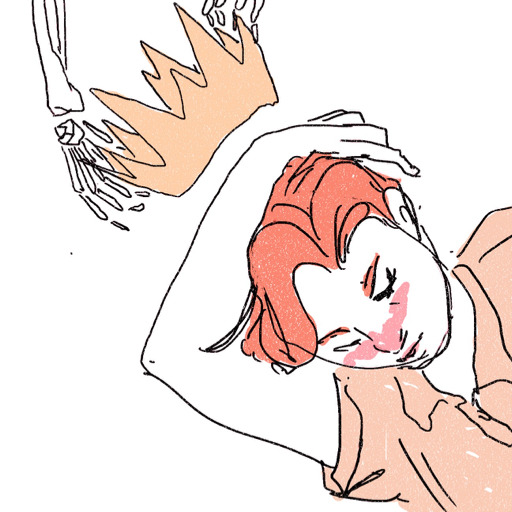
Banette is a pokemon that exists to give meaning to abandoned and discarded things. Typically they do this by possessing abandoned dolls when they evolve from their first form Shuppet. But when an ill-treated boy dies alone a friendly Shuppet he named Diya takes it upon itself to give his life meaning. Diya possesses and revives his body, becoming a Banette, and sets out to make the boy's dream of becoming a pokemon trainer come true.
Along the way Diya makes friends, fights some pokemon, finds a deep and abiding love of scarves, blurs the line between living and dead, accidentally becomes a necromancer, and to everyone's surprise even finds the time to accomplish its original goal and catch a pokemon or three.

[This lovely fanart is by Large_Egg, posted on their account here. Go give them a comment if you like it.]

Also, here's some inside-book-cover reviews comments, if you want something other than just the author's word to recommend this.

Sengachi writes death and life's little everyday events with equal reverence. -Guile
I really hope this story takes off cause I've never read anything like it and by God do I want to keep reading it. -Tech Priest Gemm
This story is magical. The first chapter made me cry like a waterfall but Diya is so optimistic and happy about the world I cant help but feel the same. -Bloodalchemy
I love this chapter, not only because of the joy and wonder as Diya explores this world through a new perspective, but also, on a sort of meta level, how it mirrors starting up a new game and immersing yourself in that world feels. There's the same kind of curiosity and wonder ... I probably felt something a lot like that when I first played pokemon Diamond! -polaris_writes

unauthorized fucking thing!!!!!!

(warning: loud chirping throughout)

More context:

  • the first osprey is the father, the one that comes later is the mother.
  • ospreys are not eagles, they're ospreys
  • ospreys only eat fish, that's why they don't register this starling as possible food
  • the starling got home safely
  • the starling was not trying to eat the eggs, it was mostly curious and you can see it trying to hop under the osprey every time the osprey tries to sit down again--this is because the starling is still a baby and has the instinct to get under an adult for warmth, even though it mostly has its feathers. this scares the osprey because that is a Foreign Creature near its eggs.
  • at the end of the video you can see the ospreys starting to turn the eggs. birds do this so the yolk and/or embryo don't stick to the shell of the egg, which is bad for the egg's health.
  • ospreys have eyes adapted to seeing beneath the surface of the water!

I see a science news article about an AI designed vaccine passing phase 1 trials.

I hunt down the actual trial paper (not linked or named in the article):

Which cites this as the computational method:

Which says they used the GeneOptimizer algorithm from ThermoScientific:

... who were recently found to have falsified a bunch of the blot images they base their GeneOptimizer performance on:

💀

... aaaand GeneOptimizer is also not actually AI. It's pretty old school deterministic machine learning that's got very well established utility:

I just have to lock in and get through my to-do list and then I'll start my new system with a clean slate and everything will be better.

Me, replying to every malingering email in my inbox: "It's going to be such a relief to clear this out finally!"

Everyone I'm replying to sending a response at the same time because I emailed them at the same time: ...

I'll set a calendar event for two weeks ahead of time and two days ahead of time so I won't forget.

If I just remember to do it every day it'll become a habit and I won't have to think about it.

I'll just stay at my desk until all of my tasks are done for the day and then they won't build up.

That's important, let me write it down on my hand so I can't ignore it.

If I skip lunch I'll catch up a little bit and I won't have to stay late or start early to stay on top of things.

I think if I work late all week that'll get me through the backlog and then I just have to keep up.

Today after about a week of confusion and asking people in real life if they've noticed anything, I discovered that there is, in fact, not a bizarre 2026 trend of "Mr Beast Pregnancy Memes" and it is all in fact just a series of tumblr posts from one Ukranian who I've never met named Petro and my two chaos incarnate tumblr mutuals who are so fascinated by the world he is conjuring that they have both been drip-feeding it onto my otherwise relatively normal tumblr dashboard.

Honestly, Tvyek is pretty miraculous. It’s permeable to water vapor but not to water, it’s nearly impossible to tear, but can be easily cut. It’s cheap and made entirely without binding chemicals. In addition to being used for wristbands, it’s used to wrap construction sites to keep out water during construction, for tear-resistant envelopes at Fed-Ex, coveralls for mechanics, and my wallet, actually.

Fun tip, though it looks like paper, Tyvek is plastic, and cannot be recycled with paper.

I didn’t even know it had a name

Me: *idly reading Anthropic's latest bullshit claims about how they're speeding up their own coding of AI with AI*

Anthropic: Our employees are writing 8x more lines of code per person per quarter.

Me: Uhuh.

Anthropic: Which we acknowledge has nothing to do with usefulness of the code and isn't a good metric.

Me: Sure ain't.

Anthropic: "Nonetheless, this represents an acceleration." (literally all they said to counter their admission lines of code is a useless metric)

Me: Sure buddy.

Anthropic: But but but! Our employees also self reported being more 4x productive!

Me: *raises eyebrow*

Anthropic: Of course we acknowledge the evidence put out by METR that coders using LLM assistance falsely overestimate their coding speedup-

Me: Overestimate. Interesting way to describe programmers actually solving problems slower when using LLMs despite thinking they were going faster. Can't help but notice that's the one report you mentioned that you didn't link too.

Anthropic: - in a self-reported non-anonymous opt-in slack survey of employees on their work performance regarding a metric intended for shareholder reports with no options but increased productivity or no increase.

Me: *jaw slowly falls open*

Me: .......

Me: *internally adjusts my understanding of how bad scientific malpractice can be*

Me: .......

Me: I literally cannot imagine being brave enough to author this and put it out into the world where future employers might find it.

Me: ..... *thinks about it* .....

Me: That's not just a turn of phrase, I literally can't imagine that. Wow.

Strange racists and homophobes on the internet seem to have access to an alternate way cooler version of TV than me. "every white character on TV is in an interracial relationship" "every show has a gay couple in it" "main characters keep having to secretly be bisexual and nonbinary" "every show has gratuitous full frontal nudity" like damn promise?? What channel???

as a black gay person real like where y'all be finding this stuff pass the name

for real though, those DO NOT WATCH OR YOU'LL CORRUPT YOUR CHILDREN lists put out by conservative christian family groups is where I find all the stellar tv shows. Like, shit I didn't know half of those existed, thanks for finding them for me, gonna go watch 30 hours of gay tv now!

I think I know how this works.

For personal context, before I went to the '98 Burning Man festival, one of the things I'd read from a couple different journalists was that "everybody" runs around naked. Which, fine by me, I'd already spent a lot of time in clothing-optional spaces, I'm not fanatic about it but it's nice.

So I got there early and set up a public shade structure on one of Black Rock City's main roads and spent most of each afternoon just watching the crowds go by. I don't remember seeing more than one actually naked person the whole week. I think a topless woman passed by my intersection maybe every half an hour, sometimes once an hour. So why in the hell were people, normally pretty smart and observant writers, coming away with the impression that everybody was naked?

Then I remembered an unrelated passage from Joel Garreau's great book about the history of the outer-ring suburbs, Edge City. Mall developers told him flat-out that they tried to keep the crowds in their malls less than 5% black. Not because they themselves were racist, but because they had determined, experimentally, that if more than 5% of the people in the mall are black, the median white shopper will wrongly describe the mall as at least half black, as mostly black. And not a few of them would describe it, at 6% black, as a mall where "only black people go." Why?

Because, emotionally, they were still upset over the last one when the next one came into view.

Same as the journalists describing Black Rock City as all naked. Same as the right-wing religious culture warriors describing television as entirely mixed-race and gender non-conforming. Not because it's even vaguely true, we know that, but because they haven't gotten over their discomfort over the last one by the time the next one comes along. The anger, not the stimulus, is the part that's continuous, so their mind lies to them that it's "all" the thing they can't get over.

What’s the solution then? Or if there’s no solution, should we make things even queerer and more diverse?

The solution is societal change, not giving into this shit wherever you have any say, and knowing how the effect works so you can push back against it most effectively. And that's frankly been effective, though we could be doing much better.

Also thank you @infamousbrad, for the framing of bigots still being pissed off by the next time they get pissed off. That's really helpful for understanding exactly how the mindset works.

Thirty-year-old Tamara Rees shows us what trans empowerment looked like in 1954. She fought Nazis, taught parachuting, and traveled the world... but her biggest challenge came when the press learned of her identity.

1950s news coverage of Tamera Rees' transition shows a time before the trans moral panic. Most stories regarded her as brave or heroic for her openness. National newspapers even celebrated her wedding in 1955.

The New York Daily News, which now hosts daily anti-trans editorials, ran a shockingly respectful series on trans people in the 1950s. Tamara Rees's narrative was among the longest and most detailed. She thoughtfully implored the public to respect not only her identity, but also other trans people like her.

Tamara wasn't the first famous trans woman of the 1950s, nor was she the best known. However, she had a unique opportunity to share her own story. You can read Tamara's 1955 autobiography, Reborn: A Factual Life Story of a Transition from Male to Female, at transreads.org/reborn 

Once when I was in undergrad, someone described something as “problematic” in class and our professor was like, “That’s cool, but ‘problematic’ doesn’t really mean anything. It means that the thing you’re describing has a problem, and in and of itself that’s not bad. Art, especially, should always have problems, or else it’s not interesting and not art, either. It sounds like you’re trying to say that this is bad, but you don’t want to say ‘bad.’ Is that right?”

So from then on whenever one of us called something problematic, he would make us talk it out until we could name the “bad” thing we were hinting at. In this particular class, 7/10 it was some type of oppression, and the remainder was like, “I’m uncomfortable because this is very new/confusing/pushing boundaries that made me feel safe.”

Once we stopped calling things “problematic” and stopping at that, class got way more interesting and... we all had to say, like, “that’s racist” or “that’s misogynistic” or “ew capitalism gross” out loud, which a lot of us had never done in a classroom before. Or we had to be like, “Uhhh... I’m not sure what’s so bad?” and confront our own beliefs and that was maybe even more useful.

Anyway. Whenever I see the word problematic, I can’t help but think of this professor being like, “Good starting point, now let’s get specific.” I think when we have to commit to saying “that’s ___” it requires a lot more careful thought about the truth and impact and complexities of whatever we’re claiming. Sometimes there really is some bullshit afoot, and also sometimes it’s art, and it should be full of problems, because that’s what art is.

Started this before actually designing any Arthurian characters and then left it rotting for a month and then had to deal with my style being ahead of the work already done when i tried to finish it. Fun!

I feel like not enough people realize that people under enormous strain act really really fucking Weird

If someone is doing things that don't make Sense, try to understand that it is entirely possible that their brain is probably under an enormous weight and fracturing under the pressure. People who have been stabbed will sometimes talk a circle around the fact that they've been stabbed because stress and shock prevent you from recognizing the distress you are in and what you need to do to seek help for it. PTSD will do this also. You will find yourself repeatedly jamming a bag of frozen fruit into the same spot in the freezer where it doesn't fit and keeps falling, over and over and over, focused on nothing but that bag. You will decide that a beanbag chair is 10000% necessary to your life. You will lose your entire shit because you stubbed your toe on a table and that means the whole setup of your furniture is wrong. These are largely harmless examples. People under strain will also hurt themselves and others. Cornered animals bite. And it doesn't heal the bite to go "Hey, are you okay?" But it might get you to an animal that stops biting, so you can start to heal. And before you had an animal that bit, you probably had an animal that kept doing shit you didn't understand as stress signals

Shout out to the autistic who’s abilities have regressed as they’ve gotten older.

“You didn’t used to be like this when you were a kid.” I know please don’t remind me

"This never bothered you when you were a kid."

Yes it did. I just let it slide because I was taught that I'm "too sensitive" anytime something bothered me. But now I'm finally standing up for myself.

"You never struggled with this when you were a kid."

Yes I did. I just burned myself out in order to do it so I wouldn't be punished. But now I'm accepting myself enough to not force myself to do what I was never meant to do.

"You didn't have these problems when you were younger."

Yes, I did. I just spent my child/teen years with structured institutions like school while not having to worry about whether I had a roof over my head or food to eat and spent my early adult years using up every bit of adrenaline I will ever have to ignore the fact that I've been chronically burnt out my whole life.

“Life after menopause is exceptionally rare in animals. It can evolve only in creatures where grannies help younger family members survive. Only human, killer whale, and short-finned pilot whale females routinely live for substantial periods after they stop breeding. Like humans, killer and pilot whales have roughly twenty-five to thirty childbearing years, then can live another thirty or so. And as Ken’s just explained, some live a lot longer. Up to a quarter of the females in a group are postreproductive. These whales are not waiting to die; they are helping their children survive. As human children often benefit from their grandmothers’ attention, killer whale grandmothers boost their grandkids’ survival. A rather bizarre twist of killer whale society is that killer whale mothers remain crucial to the survival of their adult children. When older killer whale females die, their adult children start dying at high rates, especially males. Male killer whales who are under thirty years old when their mothers die suffer a tripling of the annual mortality rate compared to males in their age group whose mothers are still alive. Male killer whales who are more than thirty years old when their mothers die face death rates more than eight times as high as males in their age group whose mothers are still living. Daughters under thirty show no mortality increase after their mothers’ death. But daughters older than thirty when their mothers die have more than two and a half times the death rate of same-age females whose mothers are alive. Males’ handicaps of the extra drag of their huge dorsal and pectoral fins and the extra food required for their immense size (at around 20,000 pounds, males can be one-third more massive than females) seem to make them reliant on their working mothers for food. Females don’t have the males’ impediments, but while raising young, females may rely on food shared by their no-longer-breeding mothers. Adult females share essentially all the fish they catch, and more than half goes to their children. Adult males share their catch only about 15 percent of the time—usually with their mothers. While no one fully understands their strange death pattern following the loss of a mother, extreme parental care is likely at the root. Toothed whales are the world’s champion nursers. Short-finned pilot whales continue to produce milk for up to fifteen years after the birth of their last calf, likely nursing other females’ young. In bottlenose and Atlantic spotted dolphins (further study might reveal others), some females never give birth. Denise Herzing dubbed them “career females,” because their role in society does not include motherhood. They might be infertile. They might be gay. But their contribution is crucial: they do a lot of babysitting. When Herzing entered the ocean with a visiting nine-year-old girl, “White Patches, the eternal babysitter herself, had never seen me babysitting a young human before. Her excitement vocalizations were audible and electric and she continued to swim around us, eyeing the human youngster attached to me.” (Researchers sometimes call babysitters “aunts.” That’s precisely who they often are.)”

— Beyond Words, by Carl Safina

Sponsored

You are using an unsupported browser and things might not work as intended. Please make sure you're using the latest version of Chrome, Firefox, Safari, or Edge.